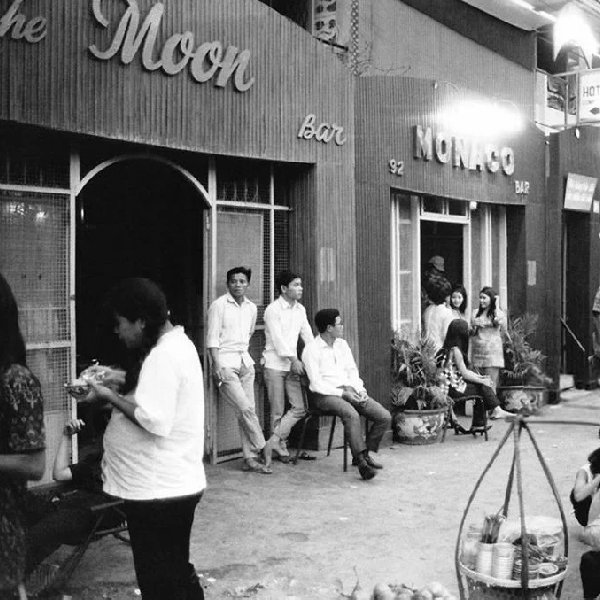
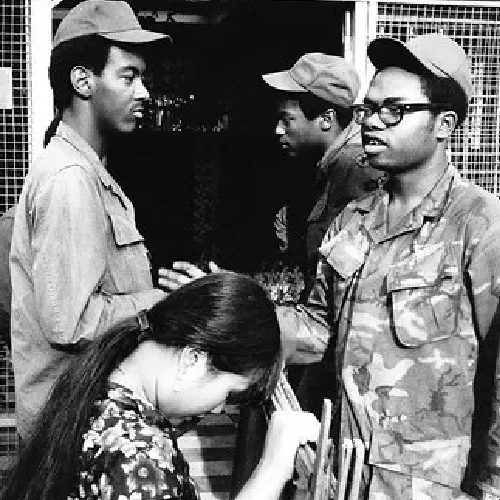
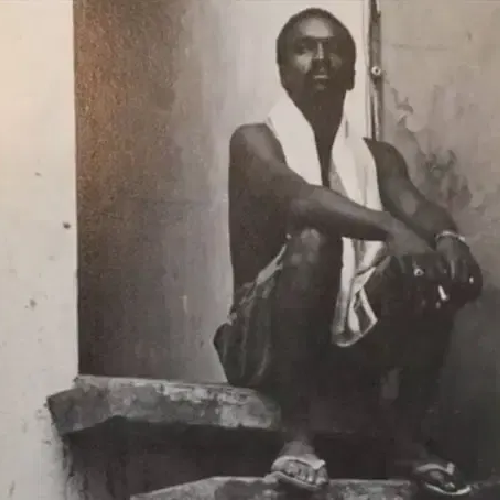
The novel Mole Creek starts in the semi-mythical area of wartime Saigon which was effectively a no-go area for white American soldiers. It’s there that one of the central characters of the novel is compromised by a Russian spy, something that reverbs to modern-day Australia half a century later.

That there were Russians operating undercover in South Vietnam is a matter of informed conjecture. That there was such an area where African-American soldiers could escape from their racist comrades, and enjoy their music, food and less legitimate pleasures, is a matter of historical fact, as James Dunbar discovered when researching the book.

Sin and soul food in Saigon’s oasis from racists

Blame it on the fog of war, or the mists of time, but there are tales from our military history that remain in the shadows.
When it comes to war stories, some secrets are carefully protected while others are quietly forgotten.  These are the rumours that have stopped being spread, the whispers that have simply fallen silent.
Take the legend of a black-only area called Soul Alley in wartime Saigon, a veritable den of iniquity that provides a backdrop for a couple of critical plot points in my new crime/spy thriller Mole Creek.
Look it up on all-knowing artificial intelligence platform Chat-GPT and you get nothing.
I first heard rumours about Soul Alley when I was researching my two non-fiction books on the Vietnam War – Tunnel Rats and A Sapper’s War. Frequently, I’d pick up references to this semi-mythical African-American area but could never find anyone who had been there.
Casual references would pop up on American veterans’ websites and it became clear that Soul Alley was very real; a cluster of narrow streets and typically twisting alleyways less than 2km from the US Army base at what is now the international airport.

However, hard facts were thin on the ground. After all, it was the kind of place you wouldn’t boast about having frequented. I finally struck gold when I discovered a 2018 website report about effort to make a documentary film.
Entitled “For black GIs in Saigon, ‘Soul Alley’ was an oasis of food and vice”, the article describes how the film makers kept coming up against the same passive secrecy.
“These vets would look at me like, ‘How do you even know about that?’” film maker Ted Irving said. “It’s something they keep to themselves.”
Part of this forgotten aspect of the Vietnam War was the racial tension within the American forces that occasionally led to riots in US army camps and near mutinies at sea. 

Throughout the same period when the country was sending young men to fight in South-East Asia, the civil rights movement was growing in power and intensity in the USA.
When its leader Martin Luther King was assassinated on April 4, 1968, the Vietnam War was at its height.  Only two weeks earlier, 500 Vietnamese civilians had been murdered in the My Lai massacre and the battle of Khe San was in full swing.
It was probably inevitable that racial tensions would simmer and occasionally boil over. In August 1968, hundreds of black prisoners overwhelmed prison guards at Long Binh Jail, a military facility just outside Saigon, where they captured the stockade commander and set buildings on fire.
Later that year, according to the New York Times, there were reports of large-scale battles between black and white soldiers in service clubs, while racial incidents occurred at the China Beach recreation area and in Danang clubs and dining halls on an almost daily basis.
In October, 1972 there was a race riot on the USS Kitty Hawk, with similar incidents on other Navy ships.
In Tunnel Rats, Australian sappers reported that many black American troops preferred to socialise with them rather than their countrymen.
So one can see how Soul Alley would be a refuge for African-American troops from the racism, both casual and overt, of their white comrades in arms.

There the bars played soul music and blues rather than pop and country, there was soul food such as collard greens, grits and fried chicken (prepared by Vietnamese cooks) and it was effectively a no-go area for whites, unless they were accompanied by a black comrade.
For a long time, military police wouldn’t venture there, partly for fear of starting a civil war among the US forces. With no laws but its own, it predictably became a hotspot for drug dealing, prostitution, gun running and money laundering, with many deserters finding a haven there.
This was confirmed in a hard-to-find Time magazine article from December 1970 which detailed a combined raid on the area by US MPs, Saigon city police and South Vietnamese Army troops.
That rare incursion was prompted by an assault on a Military Police Jeep that had strayed into the area. The two MPs escaped with their lives but not their vehicle or weapons. The subsequent raid captured 56 local women and 110 GIs, 30 of whom were deserters.
One year later, according to a contemporaneous TV news clip now on YouTube, Soul Alley was back in action.
Wartime Vietnam is just one part of Mole Creek, which is mostly set in modern-day Tasmania. But while Mole Creek is mostly fiction Soul Alley was 100 per cent fact.

The Raid On Soul Alley

Time Magazine: Monday, Dec. 14, 1970
Just after the 1 a.m. curfew one day last week, 300 heavily armed American and Vietnamese MPs, civilian police and militiamen, supported by 100 armored cars, trucks and Jeeps, swooped down on a narrow dirt alley in Saigon and sealed it off. As their house-to-house search began, G.I.s groggy with sleep and drugs scampered in every direction, a few over rooftops, trying to escape. Their women followed, some stark naked, some wearing only pajama bottoms, as spotlights from two helicopters above played on the bizarre scene. When the roundup ended four hours later, 56 girls and 110 G.I.s, including 30 deserters, were hauled off into custody.
Known as Soul Alley, this 200-yd. back street is located just one mile from U.S. military headquarters for Viet Nam. At first glance, it is like any other Saigon alley: mama-sans peddle Winston cigarettes and Gillette Foam Shaves from pushcarts, and the bronzed, bony drivers of three-wheeled, cycles sip lukewarm beer at corner food stalls as children play tag near their feet.

A closer look, however, shows that Soul Alley is a very special place. The children being bounced on their mothers’ hips have unmistakably Afro-Asian features. A sign in the local barbershop proclaims: THE NATURAL LOOK HAS ARRIVED. Green Army fatigues hang from balcony railings to dry in the sun. Black G.I.s talk and laugh, their arms around slight young Asian girls.

No Whites Allowed.
Soul Alley is home for somewhere between 300 and 500 black AWOLS and deserters. They escape arrest by using forged ID cards and mixing with the even greater number of G.I.s who are still on active duty but prefer spending nights here, away from the drabness of their barracks. There were roughly 65,000 cases of AWOL last year, and the Army estimates that about 1,000 soldiers will become deserters this year (no racial breakdowns are available).
Whites who venture into Soul Alley do so at their own risk, as two military policemen learned a month ago. Five minutes after they drove in at mid-morning in their Jeep, they walked back out—minus the vehicle and their weapons. The Army has known about Soul Alley and its deserters ever since the haven sprang up three years ago, and MPs have frequently staged minor raids and roundups. The incident with the Jeep sparked the biggest raid yet. But even if the brass cleaned up Soul Alley, its residents, rather like the Viet Cong, would soon drift back or relocate in another, similar spot.

Easy Living.
For many Soul Alley AWOLS, the living is easy. Explained one: “You get up late, you smoke a few joints, you get on your Honda and ride around to the PX, buy a few items you can sell on the black market, come back, blow some more grass, and that’s it for the day.” Rent for the second floor of a brick house rarely runs to more than $40 or $50 a month, including laundry and housekeeping services. Hustling is the name of the game here. This gives everyone plenty of money for anything from soul food at a restaurant called Nam’s to hi-fi equipment, television sets or even heroin. Here is how the system works:
From an army of papa-san forgers, the AWOL gets his phony ID and ration cards. He goes to the PX, buys an expensive item, such as a refrigerator, for as little as $71.50 in military payment certificates (MFCS). On the open market, he can sell it for $500 in MFCS. Markups on TV sets and stereo sets are almost as high.

Special Signal.
Despite such amenities, life in Soul Alley can be lonely and miserable. Many of the AWOLs would rather be back home, but cannot leave Viet Nam without facing arrest and court-martial.

Some would like to stay in Soul Alley, or something like it, but wonder whether they can. “I don’t want to go back to the States, and certainly not back to Houston, Texas,” said a black G.I. who is married to a Vietnamese. “They would call me a ‘nigger’ and my wife a ‘gook,’ and they would never leave us alone. But I can’t get a civilian job here when I get out of the service.”
Besides, many have found that they jumped from one form of racism into another, since Vietnamese often do not like dark-skinned people. Add to this the harassment by MPs, the sense of being without a country, and the day-today hassle to raise money, and the frustrations can grow unbearable.
One G.I. summed it up: “It ain’t the rules; it’s the man. Same as back in the world. A black man is the only one they grab for spitting on the streets. Over here if a bunch of brothers get together to blow some grass, right away the officers get uptight; in the next barracks over, white guys are doing the same thing, but nobody bothers them. The regs [Army Regulations] say you can grow your hair this long, but the first sergeant says he don’t care what the regs say, because he don’t like no black man with a ‘Fro.”
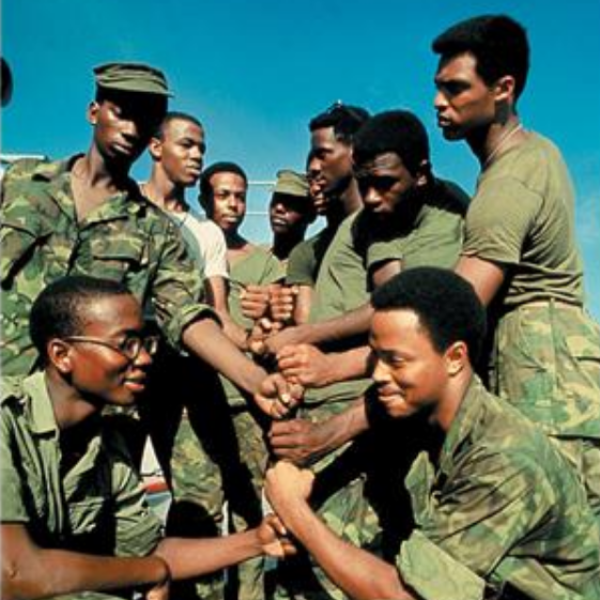
This sort of feeling has given rise to a special variation of the intricate signal that black soldiers in Viet Nam exchange when they meet. The standard greeting includes two taps on the chest —meaning “I will die for you.” In Soul Alley, some blacks add a swift downward motion of the hand—a stroke to kill.